
题目:Room Temperature Octupole Harmonic Characterization and Quantum Metric in Non-collinear Antiferromagnets
报告人:许世杰
时间:2026年9月23日,15:30-16:30
地点:师昌绪楼403室
报告摘要:
Spintronics offers a promising route toward faster, more energy-efficient, and scalable information technologies. Antiferromagnets are particularly attractive for next-generation spintronic devices because of their ultrafast dynamics, negligible stray fields, and high robustness against external perturbations. Here, we investigate noncollinear antiferromagnetic Mn3Sn thin films hosting a magnetic octupole moment tilted by 30° from the film normal, with the Kagome spin structure oriented predominantly perpendicular to the film plane. By introducing a spin–orbit-coupled amorphous Pt capping layer, we demonstrate electrical manipulation of the magnetic octupole order in Mn3Sn. The octupole spin structure and its current-induced dynamics are further characterized through harmonic transport measurements, revealing the distinctive spin–orbit response of the noncollinear antiferromagnetic state. Remarkably, we observe a pronounced angular-dependent quantum metric response at room temperature in a 60-nm-thick Mn3Sn film, exhibiting a characteristic cosq angular dependence. These results demonstrate electrical control of magnetic octupole order in noncollinear antiferromagnets and uncover robust quantum-geometric transport in relatively thick Mn3Sn films, establishing Kagome antiferromagnets as a promising platform for electrically controlled spintronic and quantum-transport applications.
报告人简介:
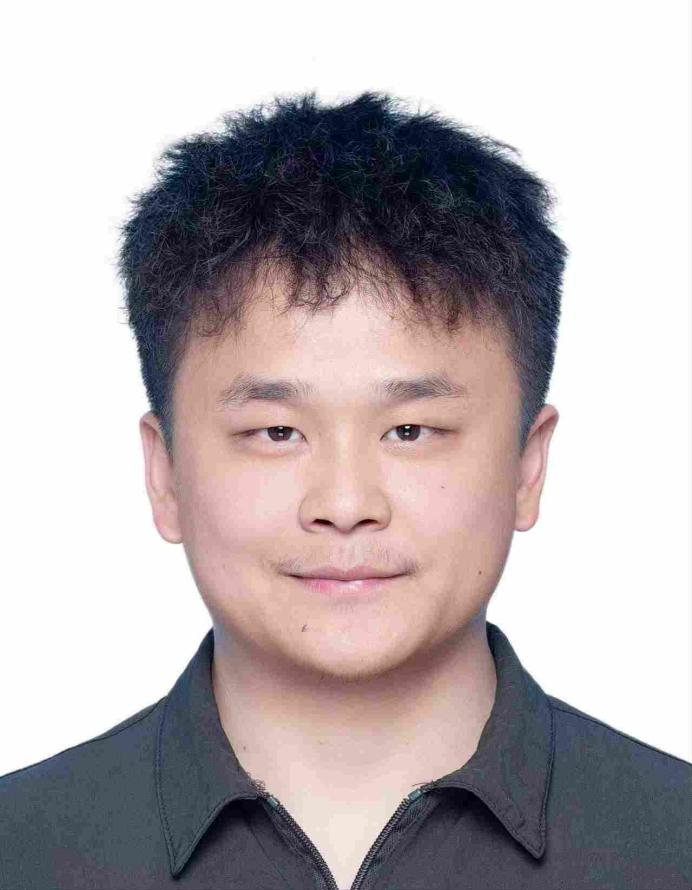
Dr. Shijie Xu is an associate professor and doctoral supervisor at state key laboratory of spintronics, Beihang University, working at the forefront of chiral and antiferromagnetic spintronics. His research bridges fundamental spin–orbit physics and emergent magnetic phenomena with functional device concepts for next-generation computing. He has made significant contributions to unconventional antiferromagnetism, including the establishment of universal scaling laws in chiral systems, the demonstration of spin-flop tunneling magnetoresistance, and the identification of Octupole-driven spin–orbit torque. His recent research further expands into orbital physics and ultrafast dynamics, encompassing orbital effects, terahertz emission, and spintronic AI architectures. Dr. Xu received his Ph.D. from Tongji University and conducted research at UCLA, Beihang University, and KAUST. In the past three years, he has published multiple first-author papers in leading journals, including five in Nature Communications, as well as Advanced Materials, Newton (Cell press) and Advanced Science, highlighting the impact of his work in chiral magnetism and antiferromagnetic spintronics.

 官方公众号
官方公众号
