
题目:AI4HM: Artificial Intelligence Guided Inverse-Design of Hybrid Materials
报告人:吴韬(Tom Wu) 教授 香港理工大学
时间:8月27日上午 10:30
地点:李薰楼 249
报告摘要:
The search for next-generation functional materials demands a radical shift from traditional trial-and-error discovery toward the targeted exploration of chemical space. As rising stars in materials science, hybrid organo-metal halides seamlessly marry the characteristics of organic and inorganic materials, offering a new fertile playground to explore composition/structure/function correlations. Although hybrid organo-metal materials have been scrutinized by material scientists for half a century, only in recent years has the field seen a surge in interest, driven by the remarkable photovoltaic performance of hybrid perovskites. Here, I highlight our latest efforts to leverages an inverse design framework powered by machine learning and generative AI to navigate the vast chemical space of hybrid materials. By integrating high-throughput screening with physical insights, we accelerate the discovery of two-dimensional hybrid perovskites with precise control over their energy band structure and physical properties. Furthermore, we harness the intricate interactions between organic molecules and inorganic framework to design novel luminescent, chiral, and ferroelectric hybrid materials.
报告人简介:
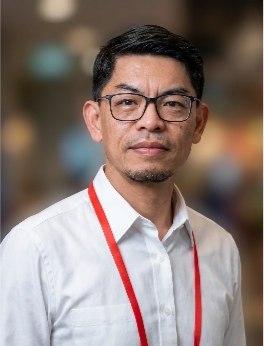
Dr. Tom Wu is Chair Professor of Frontier Materials at the Hong Kong Polytechnic University. He received his B.S. degree from Zhejiang University and his Ph.D. from the University of Maryland, College Park. Before joining PolyU as a STEM scholar, Dr. Wu worked at Argonne National Laboratory, Nanyang Technological University in Singapore, King Abdullah University of Science and Technology in Saudi Arabia, and UNSW, Sydney. Dr. Wu has authored nearly 400 peer-reviewed papers with citations of over 45,000 and an H-index of 110 (Google Scholar), and he has been among the Clarivate List of Highly Cited Researchers since 2019.

 官方公众号
官方公众号
